How the pandemic, a mathematical insight and a shared frustration led to a new approach to infection prevention

Ashleigh Myall

NEX began during my time at Imperial College London.
My research focused on using mathematics to understand how antimicrobial resistance spreads through hospitals. Then COVID-19 happened.
During the first wave of the pandemic, I worked with Imperial College Healthcare NHS Trust to produce real-time forecasts of bed and ventilator demand. This gave me a first-hand view of the enormous pressure involved in managing infections in hospitals.
But the challenge was not only treating the patients coming through the door. Hospitals also had to protect other patients from acquiring COVID-19 while receiving care.
Patients already vulnerable or fighting one infection were acquiring another—one spreading within the hospital itself. You can read more about the scale of this problem in the BBC’s coverage of hospital-acquired COVID-19.
A Much Bigger Problem than COVID-19
The pandemic made the problem unusually visible, but it was not new.
Hospitals have always had to manage the risk of infections spreading between patients. Antimicrobial resistance is making that challenge increasingly serious, as bacteria become resistant to the antibiotics we rely on to treat them.
Each year, drug-resistant bacteria cause an estimated 136 million infections¹ and could contribute to as many as 39 million deaths over the next 25 years². Even outside a pandemic, around 10% of patients acquire an infection during a hospital stay³.
Through my research, I spent time working with hospitals and infection researchers across the UK, Europe and Asia. Again and again, I saw infection prevention and control teams facing many of the same problems.
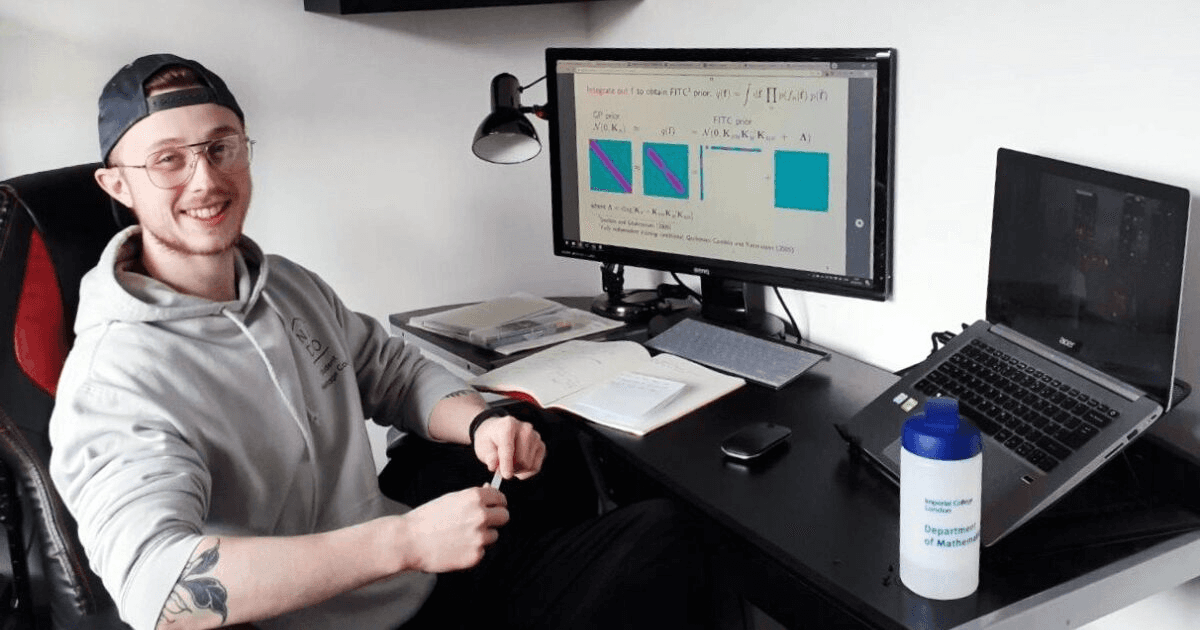
A younger me working on my PhD working on controlling antimicrobial resistance in hospitals (Read more from the Medical Research Foundation)
The data they needed existed, but it was spread across different hospital systems. Teams often had to manually review laboratory results, patient records and ward movements to understand where an infection might have come from and who else could have been exposed.
Contact tracing could take hours. Even then, teams could only see part of the picture and usually only after an infection had already occurred.
The people were not the problem. Infection prevention teams were doing difficult and important work, but the tools and information available to them were limited.
A New Way to Model Infections
This led to a question at the heart of my PhD:
Could we develop machine learning models to understand and predict how infections are spreading and who they might spread to next?
Hospitals are complex constantly changing networks. Patients move between beds and wards, share spaces and come into contact with different people throughout their stay.
We developed a different mathematical approach: one that modelled the full, changing structure of contacts inside a hospital and combined it with a much broader range of clinical, microbiology and contextual data.
Rather than simply reconstructing what had already happened, the model could learn from these patterns to identify who was most at risk of acquiring an infection next.
In 2022, we published initial work in The Lancet Digital Health. The study showed that hospital-onset COVID-19 infections could be anticipated several days in advance by combining dynamic patient-contact networks with clinical and hospital data.
It demonstrated that infection prevention did not have to remain entirely reactive. Hospitals could potentially detect risks earlier, target interventions more precisely and prevent infections before they occurred.
You can also hear me discuss the research and the thinking behind it in The Lancet Digital Health podcast.
20 JULY 2022
19 MIN
THE LANCET DIGITAL HEALTH
Ashleigh Myall on predicting hospital-onset COVID-19 infections
Ashleigh Myall joins Diana Samuel to discuss a new machine-learning framework that integrates dynamic patient-contact networks with patient clinical variables and contextual hospital variables to predict hospital-onset COVID-19 infections.
Listen to Podcast
Turning the Research into Something Hospitals Could Use
Around this time, I met Dr Chang Ho Yoon, an exceptional infectious diseases physician from the University of Oxford. We were both working at the Alan Turing Institute and quickly discovered that we shared the same frustration.
The underlying science was moving forward, but the systems available to infection prevention teams had not kept pace. Hospitals held huge amounts of useful data, yet teams still lacked practical tools to bring it together and act on it.
We believed there was an opportunity to build something much better: a platform that could help hospitals detect infections earlier, investigate transmission more quickly and understand where risks might emerge next.
No one should lose their life to a preventable hospital-acquired infection. NEX was founded to help make that possible
Our aim has been to give infection prevention teams better information, at the right time, so they could make faster, contain infections, and keep patients safe.
Implementing and Scaling Up
Since then, our systems have been developed, evaluated, and implemented across major hospital systems in the UK and Asia.
It helps infection prevention teams understand not only what has already happened, but what infections may happen next supporting earlier, more targeted responses to outbreaks and transmission risks.
The technology has developed considerably since that first pieces of research, but the purpose has remained the same:
To help hospitals move from reacting to infections after they occur towards anticipating risks and preventing avoidable harm.