The pandemic showed the cost of having PPE in the wrong place at the wrong time. Hospitals now need better intelligence about when to escalate precautions and when to stop them.

Ashleigh Myall
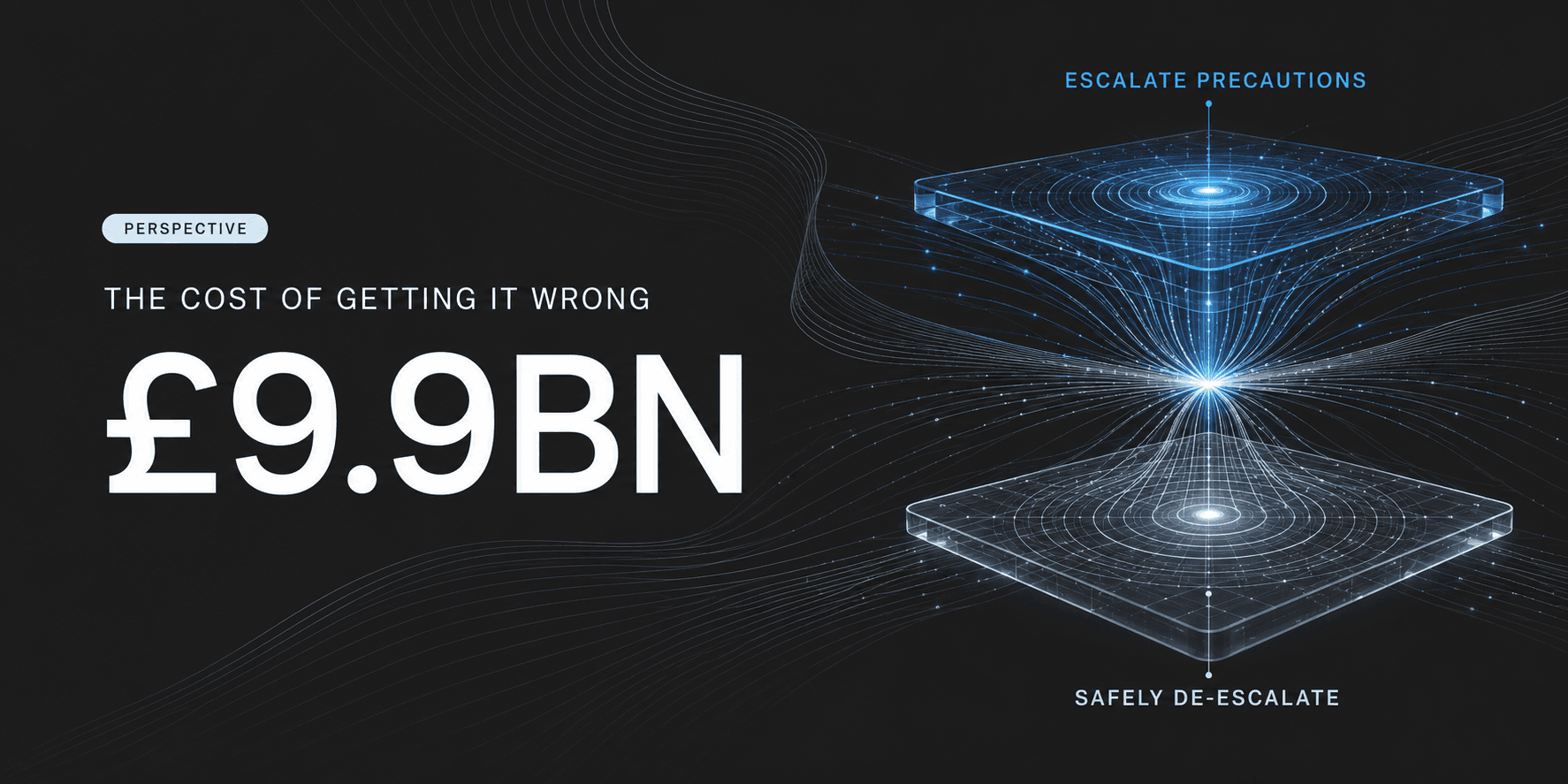
The latest findings from the UK Covid-19 Inquiry reveal an extraordinary contradiction.
The UK spent approximately £14.9 billion on Personal Protective Equipment (PPE) during the pandemic. Almost £10 billion was ultimately wasted, including £9.9 billion of PPE that was written off.
At the same time, frontline health and care workers were left without adequate protection when they needed it most.
The immediate causes were failures in pandemic planning, procurement and distribution. Hospitals could not have solved those failures alone, and better ward-level software would not have repaired a broken national supply chain.
But the scale of the loss highlights a broader lesson that should shape how hospitals manage protective equipment long after the pandemic:
Having more PPE is not enough. The right protection needs to reach the right people, in the right place, at the right time.
Not Simply More Personal Protective Equipment
PPE is essential to infection prevention, but its value depends on how intelligently it is used.
Too little protection, or protection applied too late, can expose patients and staff to avoidable infection. Precautions that remain in place after the risk has changed can consume supplies, increase workload and place additional pressure on limited isolation capacity.
The goal should not be to use as much or as little PPE as possible. It should be to use it appropriately, based on the best available information.
The World Health Organization has made a similar case: the safe and rational use of PPE can reduce waste, save money, limit supply shortages and support infection prevention.
Ultimately, hospitals need reliable systems that can identify when precautions are required, communicate that information to the ward and show when the situation should be reviewed.
Hospitals Make These Decisions Every Day
The pandemic was exceptional, but decisions about PPE and contact precautions are part of everyday hospital care.
As multidrug-resistant organisms and other difficult-to-treat infections become more common, Infection Prevention and Control teams must continually assess which patients require additional precautions. The latest UKHSA antimicrobial-resistance surveillance shows why this remains an urgent and evolving challenge.
A patient may need isolation, gloves, gowns or other measures because of a confirmed infection, colonisation status, possible exposure or emerging transmission risk.
NHS England’s National Infection Prevention and Control Manual makes clear that transmission-based precautions may be required for patients with known or suspected infection or colonisation. It also states that infection risk should be assessed when a patient enters a care area and reviewed throughout their stay.
The difficulty is that the information needed to make those decisions rarely sits in one place.
Microbiology results, previous infection status, patient movements and current precautions may be held across different systems. Patients move between wards, their risk changes and important information can be delayed or lost during handovers.
This can create two forms of avoidable risk:
Precautions are not escalated quickly enough, leaving other patients and staff unnecessarily exposed.
Precautions continue after they may no longer be required, using resources and isolation capacity that could be directed elsewhere.
Both problems arise when the people making decisions do not have timely, connected information.
Giving Ward Teams the Intelligence to Act
One of NEX’s most widely adopted workflows helps hospitals manage exactly this problem.
The NEX Infection Intelligence Platform brings together infection status, microbiology data, patient movements and local infection-control rules to help teams see where action may be required.
Ward teams can be alerted when PPE and other contact precautions should be escalated. They can also be prompted when precautions may be ready for clinical review and safe de-escalation in line with local policy.
The platform does not replace professional judgement or determine precautions independently. It helps make the right information visible to the right team at the point where a decision needs to be made.
This supports a more consistent approach across the hospital:
Patients and staff are protected when a genuine risk is present.
Possible gaps in precautions can be identified earlier.
Precautions can be reviewed when the underlying risk changes.
PPE, staff time and isolation capacity can be used more effectively.
Preparedness Is an Operational Capability
The £9.9 billion write-off is rightly a story about failed procurement and inadequate national preparedness. The National Audit Office’s earlier investigation provides further detail on how the PPE supply system struggled during the pandemic.
But preparedness does not end when equipment reaches a hospital.
It continues through thousands of everyday decisions: recognising risk, communicating it clearly, applying the right precautions and removing them when they are no longer needed.
Those decisions become increasingly difficult as infection risks grow, patients move through more complex care pathways and relevant data remains fragmented across hospital systems.
The lesson is not that hospitals should use less PPE.
It is that hospitals need better intelligence to use PPE well—protecting patients and staff while making responsible use of limited resources.