For years, the Phramongkutlao (PMK) Hospital Infection Prevention and Control (IPC) team spent up to ten hours a week just finding the data, before they could even start deciding what it meant. That's what Saowapap Kasinant and Mereeya Poomirach, two nurses on the team, described in separate interviews about their day-to-day work.

NEX Health Intelligence
Finding the Data Used to Be the Job
Saowapap Kasinant's team printed culture results from the lab system every day and checked them ward by ward against device-insertion records, cross-referencing lab results against admission history on a separate page to see whether an infection could have come from home.
It took a lot of time, especially for the ICU, which already has a high infection load
Saowapap Kasinant, on the weekly cost of the old process, on top of walking the wards to check charts in person
Mereeya Poomirach's team faced the same problem from a different angle: matching infection data, device data and patient data, printed and sorted by hand, "roughly 10–12 hours a week," some cases never made it through.
Honestly, we wouldn't know. The case would just be lost
Mereeya Poomirach, on what happened to cases that fell through the cracks
Less Time Matching Data Means More Time on the Patient
What changed for the team was how much of the week went into reaching a decision, not the decision itself.
Saowapap now goes straight to chart review on cases that meet the team's targeted surveillance criteria, rather than checking every positive culture. Mereeya's team checks what the system has already filtered against their own criteria, rather than sorting it themselves.
What used to take two to three hours a day now takes about half an hour.
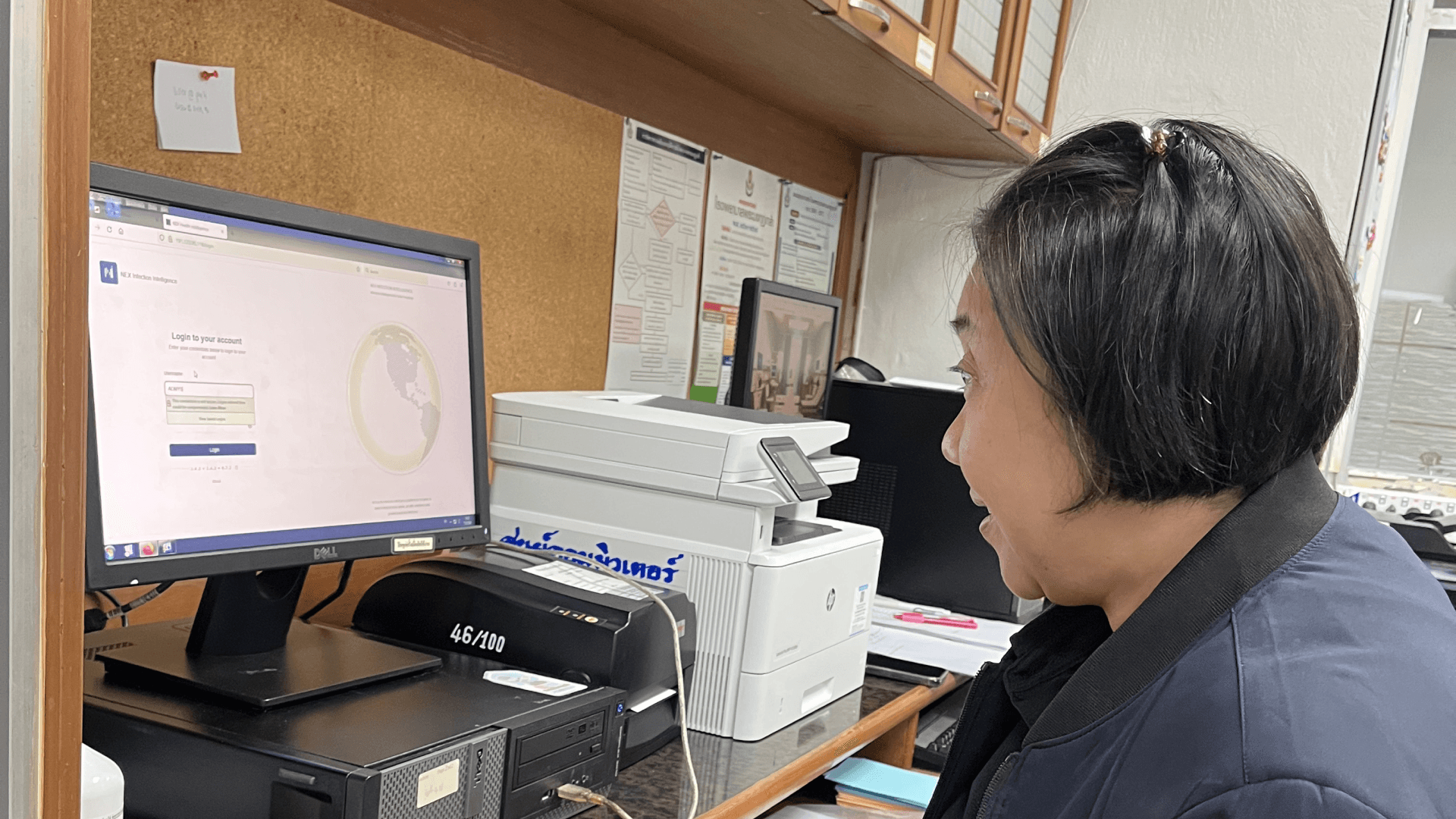
Saowapap Kasinant, IPC nurse at PMK, logs into NEX to start her review
That speed changes what the team can catch. Saowapap recalls Candida turning up in two or three adjacent beds within a short window, close enough to raise concern, and flagging the ward before it spread further.
Detection is faster, and so is taking action.
Saowapap Kasinant, on catching a Candida cluster across adjacent beds before it spread
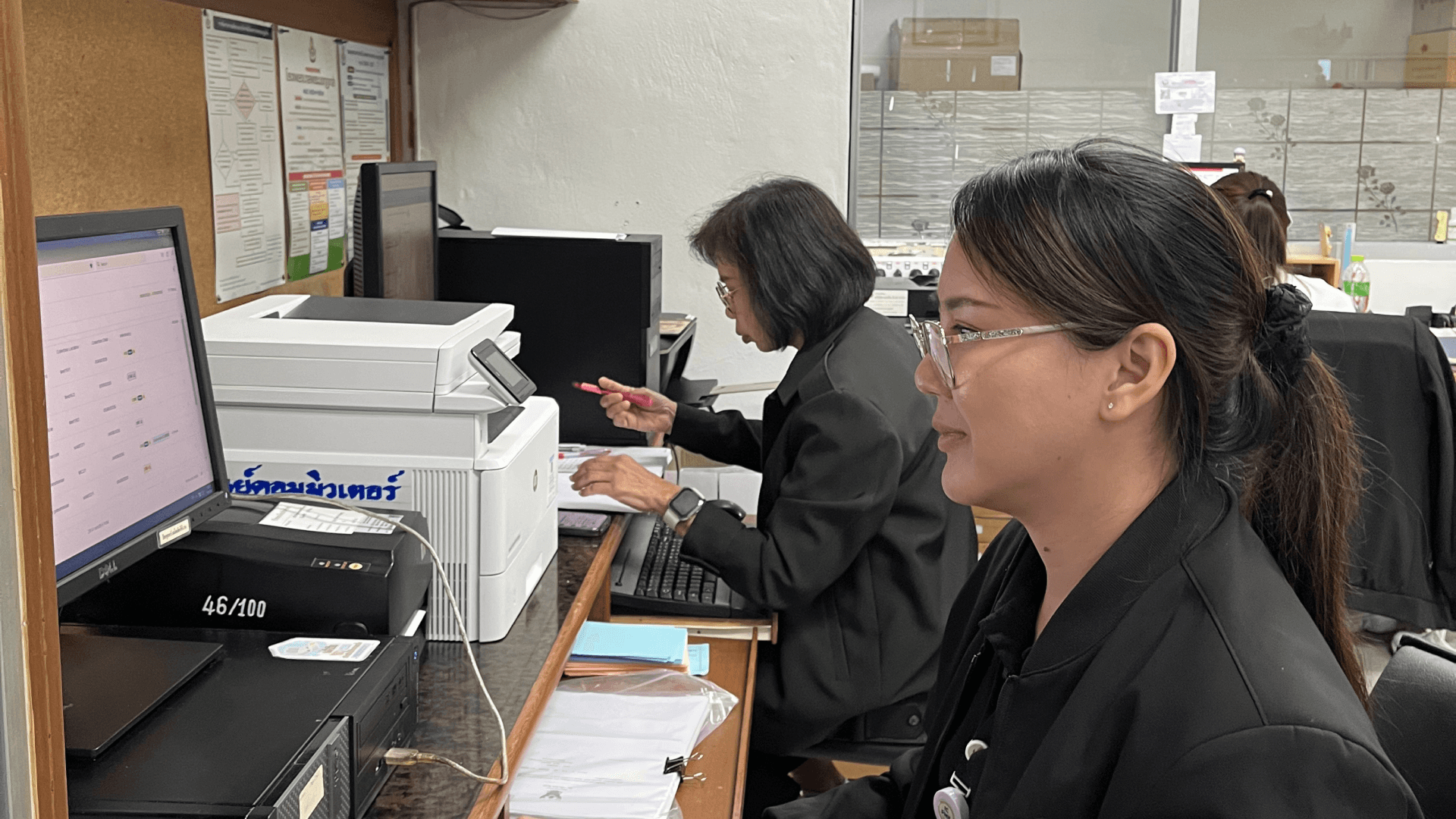
Mereeya Poomirach at her workstation, checking filtered cases rather than sorting the data herself.
The Team's Judgement Is Still the Last Word
Faster data has not changed what the team relies on their own experience to decide.
Saowapap points to pneumonia as the case type that still takes real work.
We still need to review the chest X-rays, look closely at the symptoms, compare films day by day, and assess the fever. That part still requires discussion with the attending physician and input from a specialist to read the films.
Saowapap Kasinant, on why pneumonia cases still take a clinician's full review
Mereeya says the same about fever cases on her side of the team, the one category she still checks in full: "That's the one part that still takes real time, same as before." For isolation, colonisation and isolation tracking flags when a case needs follow-up or screening and gives the IPC team an easier way to coordinate updates with the ward. What's left for Mereeya to check is the clinical confirmation: "We just confirm that there's an infection at that site and check what's already been done.”
A Team With More Time Does More Than Catch Infections Faster
Saowapap now spends more of her week on the cases that need real attention. "We don't have to review every case in the lab system," she says, "we can focus directly on the ones that actually matter." Mereeya's team has put saved time into environmental checks, medical supplies, and improving how the team itself works: "More time for things like environmental checks, medical supplies, and developing workflows that make things easier for us." When a case needs a root cause analysis with the ward, that work now starts sooner too, prompted directly on the infected-patient page: "The system gives us the 'why' faster," she says.
The shift has reached the wards as well. Mereeya has noticed that Infection Control Ward Personnel, whose confidence in judging a case used to vary, can now check their own read against the same view the IPC team uses: "They can open it and check for themselves, and feel more confident, because the system is showing the same read, that yes, this is an infection. It helps them feel more confident that what they're looking at is actually the kind of hospital-acquired infection the hospital wants to track."
What This Says About the Team's Work
The PMK IPC team's job was never just finding data. It was deciding, case by case, what that data meant for a patient and a ward. What's changed is how much of the week goes into the finding, versus the deciding.
We should let the easy matching work be the program's job, so we can spend our time on other things, reviewing more data, or doing more creative work that helps the hospital.
Mereeya Poomirach, on what she'd tell IPC teams still working the old way
Saowapap and Mereeya's accounts both point the same way: less time spent assembling the picture, more time spent acting on it.
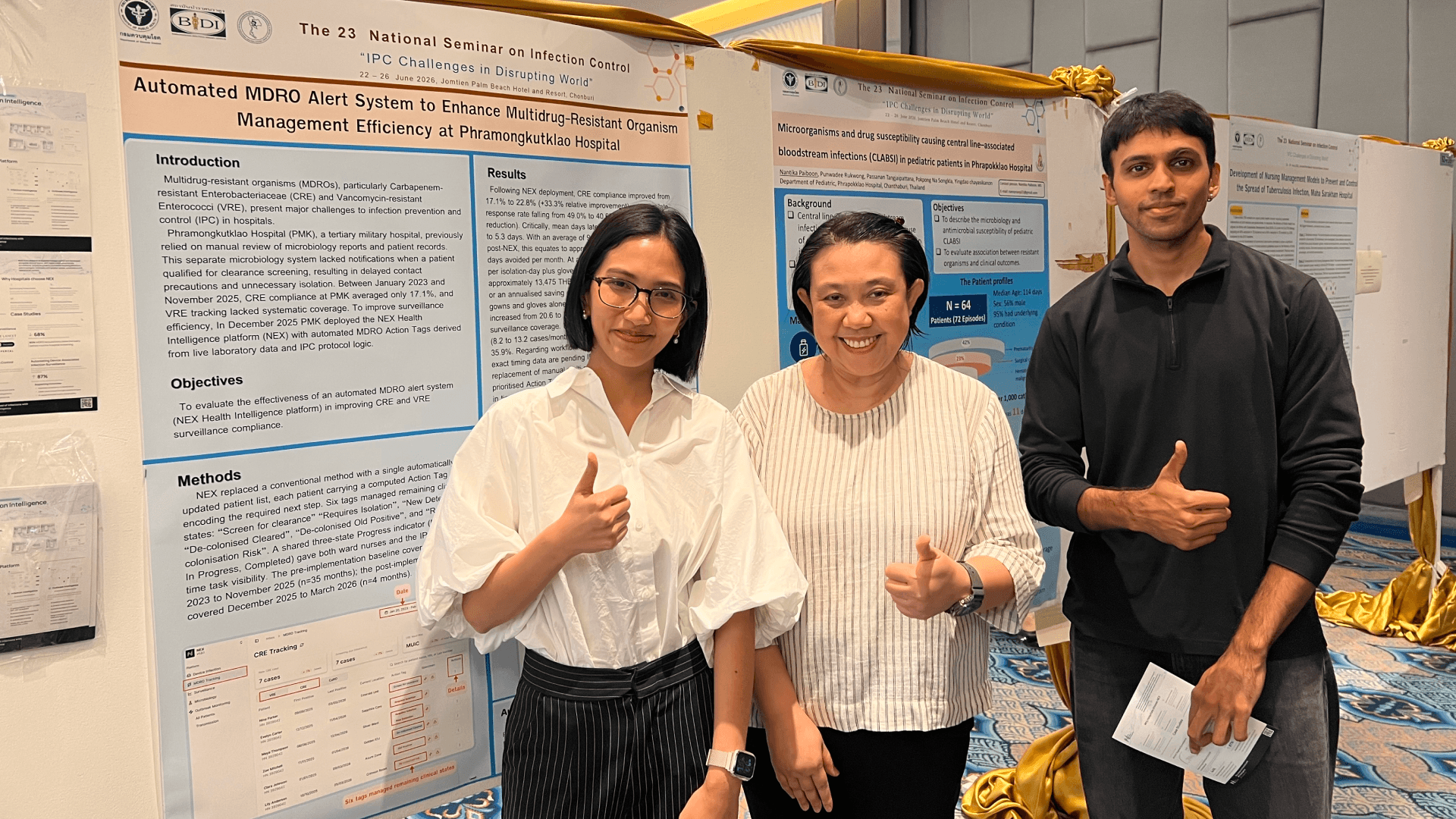
Saowapap Kasinant and NEX Health Intelligence team showcasing research at a recent conference event.